Tuesday, January 27, 2015

What Did Jesus Really Say to the Criminal at the Cross? - Anastasios Kioulachoglou
Anastasios Kioulachoglou
What did Jesus really say to the criminal at the cross?
Another passage that is used to support the doctrine of living immediately after death is what the Lord Jesus Christ said to the repented criminal that was crucified with him.
Luke 23:42-43
“Then he said to Jesus, "Lord, remember me when you come into your kingdom." And Jesus said to him, "Assuredly, I say to you, today you will be with me in Paradise."
“Then he said to Jesus, "Lord, remember me when you come into your kingdom." And Jesus said to him, "Assuredly, I say to you, today you will be with me in Paradise."
So people get verse 43 and say “you see: the dead criminal was that day with Jesus in Paradise”. However, when you try to understand a passage you have to take all the other passages into consideration. And as we have extensively covered in the article “Resurrection or life immediately after death” the great hope of the Christian is not death but the resurrection. Resurrection is the main thread in the word of God when it comes to life after death. Here is what happens in the above given passage: the ancient Greek text had no commas and no points of punctuation. This is not an assumption. It is a FACT! In other words the passage reads the way it reads because the translators decided to put a comma before the word “today”, thus making Jesus appear as promising to the criminal that despite the fact that he would not have been resurrected, he would be that very day with Jesus in paradise. But such an interpretation is we believe false on two grounds that we explain below.
“And so we shall always be with the Lord”
The Word very clearly says that to be with the Lord we need resurrection! You do not “go to be with the Lord” when you die. You will be with the Lord when he returns and you are resurrected. Indeed 1 Thessalonians 4:16-17 says:
1 Thessalonians 4:16-17
“"For the Lord himself will descend from heaven with a cry of command, with the voice of an archangel, and with the sound of the trumpet of God. And the dead in Christ will rise first. Then we who are alive, who are left, will be caught up together with them in the clouds to meet the Lord in the air, and so we shall always be with the Lord."”
“"For the Lord himself will descend from heaven with a cry of command, with the voice of an archangel, and with the sound of the trumpet of God. And the dead in Christ will rise first. Then we who are alive, who are left, will be caught up together with them in the clouds to meet the Lord in the air, and so we shall always be with the Lord."”
How we SHALL (in the future) always be with the Lord? Through resurrection! There is no other way! Unless we are ready to accept that Jesus was playing favors and for that particular criminal the Word of God didn’t apply and he didn’t need resurrection to be with the Lord, then it is obvious that the traditional interpretation is faulty. Furthermore, as Paul says in 1 Corinthians 15:51-55:
“Behold! I tell you a mystery. We shall not all sleep, but we shall all be changed, in a moment, in the twinkling of an eye, at the last trumpet. For the trumpet will sound, and the dead will be raised imperishable, and we shall be changed. For this perishable body must put on the imperishable, and this mortal body must put on immortality. When the perishable puts on the imperishable, and the mortal puts on immortality, then shall come to pass the saying that is written: "Death is swallowed up in victory." “O death, where is your victory? O death, where is your sting?"
To be immortal you must put on immortality, and this will only happen at the last trumpet, at the coming of the Lord. If after death you were already immortal, then why on earth would you need to put on again immortality?! Also the Lord said:
John 5:25-29
“"Truly, truly, I say to you, an hour is coming, and is now here, when the dead will hear the voice of the Son of God, and those who hear will live. For as the Father has life in himself, so he has granted the Son also to have life in himself. And he has given him authority to execute judgment, because he is the Son of Man. Do not marvel at this, for an hour is coming when all who are in the tombs will hear his voice and come out, those who have done good to the resurrection of life, and those who have done evil to the resurrection of judgment.”
“"Truly, truly, I say to you, an hour is coming, and is now here, when the dead will hear the voice of the Son of God, and those who hear will live. For as the Father has life in himself, so he has granted the Son also to have life in himself. And he has given him authority to execute judgment, because he is the Son of Man. Do not marvel at this, for an hour is coming when all who are in the tombs will hear his voice and come out, those who have done good to the resurrection of life, and those who have done evil to the resurrection of judgment.”
Do the dead live now? According to the Lord, NO! That’s why he uses future tense in what He says: “an hour is coming, and is now here, when the dead will hear the voice of the Son of God, and those who hear will live”. The dead are not living now. They WILL live in that day, when “when all who are in the tombs will [future] hear his voice and come out, those who have done good to the resurrection of life, and those who have done evil to the resurrection of judgment”
Jesus Himself died and had to be resurrected 3 days after. As Paul said quoting David:
Acts 13:34-37
“And as for the fact that he raised him from the dead, no more to return to corruption, he has spoken in this way, "'I will give you the holy and sure blessings of David.' Therefore he says also in another psalm, "'You will not let your Holy One see corruption.' For David, after he had served the purpose of God in his own generation, fell asleep and was laid with his fathers and saw corruption, but he whom God raised up did not see corruption.”
“And as for the fact that he raised him from the dead, no more to return to corruption, he has spoken in this way, "'I will give you the holy and sure blessings of David.' Therefore he says also in another psalm, "'You will not let your Holy One see corruption.' For David, after he had served the purpose of God in his own generation, fell asleep and was laid with his fathers and saw corruption, but he whom God raised up did not see corruption.”
Had Jesus not been raised from the dead He would indeed have seen corruption. Jesus obviously was not in paradise (which is something still future) that day but in the tomb. He could therefore in no way issue a promise to the criminal that that very day he would be with him in Paradise.
What and where is “paradise”?
The second reason this interpretation is faulty is because Jesus’ promise was about the paradise. When He spoke about it, He was answering to the request of the criminal, who said:
Luke 23:42
“Jesus, remember me when you come into your kingdom.”
“Jesus, remember me when you come into your kingdom.”
He obviously had heard about the coming Kingdom of God. This was the constant theme of Jesus’ teaching. So he knew this teaching. Therefore when Jesus replied to him, he replied on this request. Many get confused because of the tradition that interprets “paradise” as a place in heaven where the good ones go after their death. But paradise is nothing like this! To find the true meaning of paradise we need to look not into human interpretations but into the Word of God. And this Word leaves no place for doubts. In Revelation 2:7 we hear Jesus giving the following promise:
“To the one who conquers I will grant to eat of the tree of life, which is in the paradise of God.'”
So the tree of life is in the paradise of God. The next reference to the tree of life is in Revelation 22:1-2, where we read:
Revelation 22:1-2
“Then the angel showed me the river of the water of life, bright as crystal, flowing from the throne of God and of the Lamb through the middle of the street of the city; also, on either side of the river, the tree of life with its twelve kinds of fruit, yielding its fruit each month. The leaves of the tree were for the healing of the nations.”
“Then the angel showed me the river of the water of life, bright as crystal, flowing from the throne of God and of the Lamb through the middle of the street of the city; also, on either side of the river, the tree of life with its twelve kinds of fruit, yielding its fruit each month. The leaves of the tree were for the healing of the nations.”
The tree of life was on either side of a river, which was flowing “through the middle of the street of the city”. Which city? The answer is given in Revelation 21:1-2:
“Then I saw a new heaven and a new earth, for the first heaven and the first earth had passed away, and the sea was no more. And I saw the holy city, new Jerusalem, coming down out of heaven from God, prepared as a bride adorned for her husband.”
So the tree of life is part of the new Jerusalem and therefore part of the future heaven and earth! Now connecting the dots: since the tree of life is in the paradise of God, is the paradise something present? NO! It will become present in the new earth! As Peter said:
2 Peter 3:13
“But according to his promise we are waiting for new heavens and a new earth in which righteousness dwells.”
“But according to his promise we are waiting for new heavens and a new earth in which righteousness dwells.”
The new heavens and the new earth, and thus also the paradise being part of the new earth, are things still to come. We are waiting for them! There is no paradise right now as the new earth to which it is part is still not there. But there will be! And in that paradise, in that new earth, in the Kingdom of God, we will see also the repented criminal, exactly as the Lord promised him that day:
“Assuredly I say to you today, you will be with me in paradise”
This is the right way to read this passage.
Monday, January 26, 2015
Lazarus and the Rich Man, What You Don't Know - Anastasios Kioulachoglou
Wow! What an eye opener!! Thank you Heavenly Father!
-----------------------
Anastasios Kioulachoglou
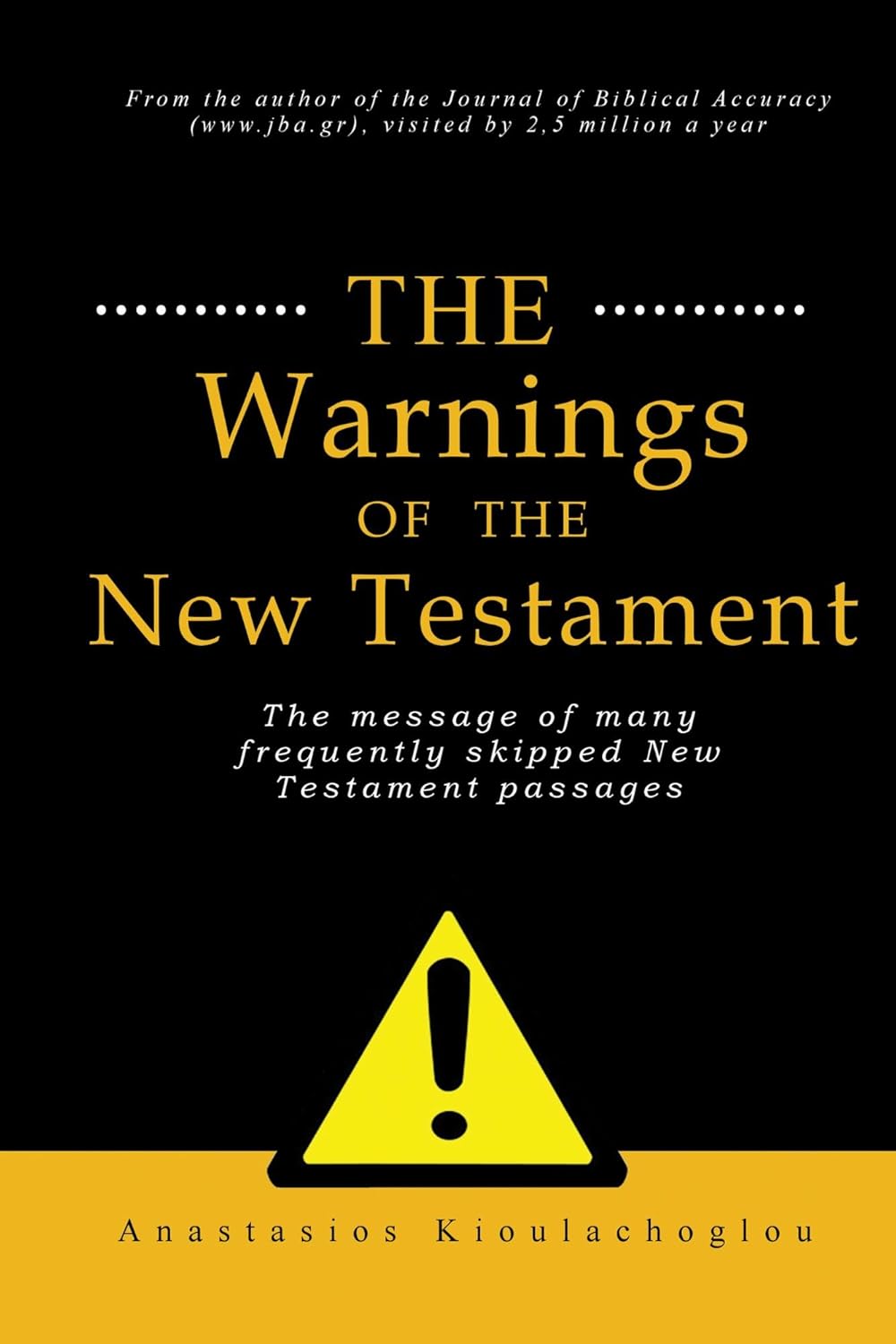
Kindle and paperback at Amazon
-----------------------
Anastasios Kioulachoglou
Lazarus and the rich man
(Note: This article is part of the study with title: Resurrection or life immediately after death ? The reader is advised to also read the other articles of this study.)
We have seen up to now that the Bible clearly teaches that the dead are dead, i.e. they are without consciousness, waiting for the resurrection. This we recognise is against the traditional view that believes that though somebody dies “his soul continues living”. We have however seen, from a multitude of Scriptures, that this traditional view cannot be correct, as it contradicts Scripture. There are though a few passages of the Bible that being misunderstood are used by tradition to support its doctrine of a supposed life immediately after death. One such passage is the story of the rich man and Lazarus, given in Luke 16:19-31. There we read:
Luke 16:19-31
"There was a certain rich man who was clothed in purple and fine linen and fared sumptuously every day. But there was a certain beggar named Lazarus, full of sores, who was laid at his gate, desiring to be fed with the crumbs which fell from the rich man’s table. Moreover the dogs came and licked his sores. So it was that the beggar died, and was carried by the angels to Abraham’s bosom. The rich man also died and was buried. And being in torments in Hades, he lifted up his eyes and saw Abraham afar off, and Lazarus in his bosom. Then he cried and said, ‘Father Abraham, have mercy on me, and send Lazarus that he may dip the tip of his finger in water and cool my tongue; for I am tormented in this flame.’ But Abraham said, ‘Son, remember that in your lifetime you received your good things, and likewise Lazarus evil things; but now he is comforted and you are tormented. ‘And besides all this, between us and you there is a great gulf fixed, so that those who want to pass from here to you cannot, nor can those from there pass to us.’ Then he said, ‘I beg you therefore, father, that you would send him to my father’s house, ‘for I have five brothers, that he may testify to them, lest they also come to this place of torment.’ Abraham said to him, ‘They have Moses and the prophets; let them hear them.’ And he said, ‘No, father Abraham; but if one goes to them from the dead, they will repent.’ But he said to him, ‘If they do not hear Moses and the prophets, neither will they be persuaded though one rise from the dead.’"
"There was a certain rich man who was clothed in purple and fine linen and fared sumptuously every day. But there was a certain beggar named Lazarus, full of sores, who was laid at his gate, desiring to be fed with the crumbs which fell from the rich man’s table. Moreover the dogs came and licked his sores. So it was that the beggar died, and was carried by the angels to Abraham’s bosom. The rich man also died and was buried. And being in torments in Hades, he lifted up his eyes and saw Abraham afar off, and Lazarus in his bosom. Then he cried and said, ‘Father Abraham, have mercy on me, and send Lazarus that he may dip the tip of his finger in water and cool my tongue; for I am tormented in this flame.’ But Abraham said, ‘Son, remember that in your lifetime you received your good things, and likewise Lazarus evil things; but now he is comforted and you are tormented. ‘And besides all this, between us and you there is a great gulf fixed, so that those who want to pass from here to you cannot, nor can those from there pass to us.’ Then he said, ‘I beg you therefore, father, that you would send him to my father’s house, ‘for I have five brothers, that he may testify to them, lest they also come to this place of torment.’ Abraham said to him, ‘They have Moses and the prophets; let them hear them.’ And he said, ‘No, father Abraham; but if one goes to them from the dead, they will repent.’ But he said to him, ‘If they do not hear Moses and the prophets, neither will they be persuaded though one rise from the dead.’"
Now before we say anything about a passage, especially one that seems to contradict many other passages, we need to study its context. To whom did Jesus say this story ? This we can easily find by looking at the verses that precede the above passage. Starting from Luke 16:1 we can see that the Lord spoke to His disciples and gave them a teaching that ended with the following conclusion: “No servant can serve two masters: for either he will hate the one, and love the other; or else he will hold to the one, and despise the other. You cannot serve God and mammon. ” (Luke 16:13) Now to this the Pharisees that were around responded as follows: “And the Pharisees also, who were covetous, heard all these things: and they derided him” (Luke 16:14). Then Jesus moved on and replied to them:
Luke 16:15-19
“And He said to THEM [the Pharisees], You are those who justify yourselves before men, but God knows your hearts. For what is highly esteemed among men is an abomination in the sight of God. The law and the prophets were until John. Since that time the kingdom of God has been preached, and everyone is pressing into it. And it is easier for heaven and earth to pass away than for one tittle of the law to fail. Whoever divorces his wife and marries another commits adultery; and whoever marries her who is divorced from her husband commits adultery. There was a certain rich man who was clothed in purple and fine linen and fared sumptuously every day.”
“And He said to THEM [the Pharisees], You are those who justify yourselves before men, but God knows your hearts. For what is highly esteemed among men is an abomination in the sight of God. The law and the prophets were until John. Since that time the kingdom of God has been preached, and everyone is pressing into it. And it is easier for heaven and earth to pass away than for one tittle of the law to fail. Whoever divorces his wife and marries another commits adultery; and whoever marries her who is divorced from her husband commits adultery. There was a certain rich man who was clothed in purple and fine linen and fared sumptuously every day.”
I have intentionally included verse 19 in the above. Because this is part of the same talk that started in verse 15 and was addressed to “them”, them being the Pharisees. It was to them that Jesus tell the story of Lazarus and the rich man. He was not giving there a sermon to the people or a teaching to his disciples (though they were present). In contrast His eyes were looking at the Pharisees and His words were addressed to them. It was only after He completed this story that He turned again to the disciples, for we are reading in Luke 17:1 “then He said to the disciples….”. In other words, looking in chapter 16 as a whole we can see that what the Lord said in that chapter was addressed to two different groups of people: what he said from Luke 16:1 to 13 was addressed to the disciples with the Pharisees hearing. To this the Pharisees reacted deriding him. Then from verses 15-31 (which also includes the story we are looking at) He turned to the Pharisees and addressed them. When He was done with them, He turned again to the disciples (Luke 17:1).
It was therefore to the Pharisees that the Lord addressed the Lazarus and the rich man story. Now looking at this story we may feel very perplexed as there are elements in this that are not seen elsewhere in the Bible. Let’s see some of them:
i) The rich man died and went to Hades, where he was apparently tormented. As it appears from the passage he was still conscious as he could see, feel and speak. Moreover he had still sympathy and concern for his brothers and he wanted to warn them. This description of Hades and the state of the dead is in obvious contradiction with many Scriptures, some of which we give below:
Ecclesiastes 9:4-6, 10
"But for him who is joined to all the living there is hope, for a living dog is better than a dead lion. For the living KNOW that they will die; BUT THE DEAD KNOW NOTHING, and they have no more reward, for the memory of them is forgotten. Also their love, their hatred, and their envy have now perished; NEVERMORE WILL THEY HAVE A SHARE IN ANYTHING DONE UNDER THE SUN. ....... Whatever your hand finds to do, do it with your might FOR THERE IS NO WORK OR DEVICE OR KNOWLEDGE OR WISDOM IN THE GRAVE (Sheol) WHERE YOU ARE GOING."
"But for him who is joined to all the living there is hope, for a living dog is better than a dead lion. For the living KNOW that they will die; BUT THE DEAD KNOW NOTHING, and they have no more reward, for the memory of them is forgotten. Also their love, their hatred, and their envy have now perished; NEVERMORE WILL THEY HAVE A SHARE IN ANYTHING DONE UNDER THE SUN. ....... Whatever your hand finds to do, do it with your might FOR THERE IS NO WORK OR DEVICE OR KNOWLEDGE OR WISDOM IN THE GRAVE (Sheol) WHERE YOU ARE GOING."
Psalms 6:5
“For in death there is no remembrance of you: in the grave (Hebrew: Sheol, Hades in Septuagint) who will give you thanks?”
“For in death there is no remembrance of you: in the grave (Hebrew: Sheol, Hades in Septuagint) who will give you thanks?”
Psalms 31:17
“let them be silent in the grave (Hebrew: Sheol, Hades in Septuagint)”.
“let them be silent in the grave (Hebrew: Sheol, Hades in Septuagint)”.
Psalms 115:17
“The dead do not praise the LORD, nor any who go down into silence. [Septuagint: go down into Hades i.e. Hades = silence]”
“The dead do not praise the LORD, nor any who go down into silence. [Septuagint: go down into Hades i.e. Hades = silence]”
Psalms 30:9
“What profit is there in my blood, when I go down to the pit? Will the dust praise you? Will it declare your truth? ”
“What profit is there in my blood, when I go down to the pit? Will the dust praise you? Will it declare your truth? ”
Isaiah 38:18-19
“For the grave [Sheol] cannot praise you, death can not celebrate you: they that go down into the pit cannot hope for your truth. The living, the living, he shall praise you, as I do this day: the father shall make known your truth to the children. ” (NKJV-KJV)
“For the grave [Sheol] cannot praise you, death can not celebrate you: they that go down into the pit cannot hope for your truth. The living, the living, he shall praise you, as I do this day: the father shall make known your truth to the children. ” (NKJV-KJV)
As it is obvious from the above, Sheol (in Hebrew) or Hades (in Greek) is a place of silence and non-consciousness. There is no tormenting or refreshing there. There are no feelings of sympathy and there is no knowledge there. There are really more than 70 occurrences of the words Sheol and Hades in the Bible and nowhere do we see in them the characteristics we see in the above story. Really in our story we see the rich man in Hades, speaking, feeling, having sympathy and being tormented. Why is that? Before we see the why, let’s also see some other points of this story. Let’s focus on the poor Lazarus.
ii) So for poor Lazarus we read:
Luke 16:22
“And it came to pass, that the beggar died, and was carried by the angels into Abraham's bosom”
“And it came to pass, that the beggar died, and was carried by the angels into Abraham's bosom”
Once again this sentence contains strange references, unprecedented in the Bible. Indeed, there is no other Biblical reference to “Abraham’s bosom” and to angels bringing people there. There are as we said more than 70 occurrences of the words Sheol and Hades in the Bible that define Hades, literally the grave, as the place that all dead – without distinction – go. But we never read of an “Abraham’s bosom” there, nor do we read that the poor or the just go to a different place than the rich or the unjust. Why is Jesus making such references that have no parallel in the Scripture and in fact contradict it in many points?
The answer can be found by going back to the context: to whom was Jesus addressing this story? As we saw this was not intended to be a general teaching on the dead but it was addressed specifically to the Pharisees that scorned him because he was teaching that there is no way to work both God and money. This audience we read were “lovers of money”, “covetous” and they “were justifying themselves among men”. The Pharisees had, as we can read in other places in the Scripture, traditions that didn’t have anything to do with the Word of God. They believed things that were foreign to Scripture and made the Word of God of no effect. Mark 7:1-13 give us some insight on how far from the Bible this sect was:
Mark 7:1-13
“Then the Pharisees and some of the scribes came together to Him, having come from Jerusalem. Now when they saw some of His disciples eat bread with defiled, that is, with unwashed hands, they found fault. For the Pharisees and all the Jews do not eat unless they wash theirhands in a special way, holding the tradition of the elders. When they come from the marketplace, they do not eat unless they wash. And there are many other things which they have received and hold, like the washing of cups, pitchers, copper vessels, and couches. Then the Pharisees and scribes asked Him, "Why do Your disciples not walk according to the tradition of the elders, but eat bread with unwashed hands?" He answered and said to them, "Well did Isaiah prophesy of you hypocrites, as it is written: ‘This people honours Me with their lips, But their heart is far from Me. And in vain they worship Me, Teaching as doctrines the commandments of men.’ "For laying aside the commandment of God, you hold the tradition of men––the washing of pitchers and cups, and many other such things you do." He said to them, "All too well you reject the commandment of God, that you may keep your tradition. "For Moses said, ‘Honor your father and your mother’; and, ‘He who curses father or mother, let him be put to death.’ "But you say, ‘If a man says to his father or mother, "Whatever profit you might have received from me is Corban" ––’(that is, a gift to God), "then you no longer let him do anything for his father or his mother, "making the word of God of no effect through your tradition which you have handed down. And many such things you do."”
“Then the Pharisees and some of the scribes came together to Him, having come from Jerusalem. Now when they saw some of His disciples eat bread with defiled, that is, with unwashed hands, they found fault. For the Pharisees and all the Jews do not eat unless they wash theirhands in a special way, holding the tradition of the elders. When they come from the marketplace, they do not eat unless they wash. And there are many other things which they have received and hold, like the washing of cups, pitchers, copper vessels, and couches. Then the Pharisees and scribes asked Him, "Why do Your disciples not walk according to the tradition of the elders, but eat bread with unwashed hands?" He answered and said to them, "Well did Isaiah prophesy of you hypocrites, as it is written: ‘This people honours Me with their lips, But their heart is far from Me. And in vain they worship Me, Teaching as doctrines the commandments of men.’ "For laying aside the commandment of God, you hold the tradition of men––the washing of pitchers and cups, and many other such things you do." He said to them, "All too well you reject the commandment of God, that you may keep your tradition. "For Moses said, ‘Honor your father and your mother’; and, ‘He who curses father or mother, let him be put to death.’ "But you say, ‘If a man says to his father or mother, "Whatever profit you might have received from me is Corban" ––’(that is, a gift to God), "then you no longer let him do anything for his father or his mother, "making the word of God of no effect through your tradition which you have handed down. And many such things you do."”
The last phrase “and many such things you do” shows that the above were not the only instances where the Pharisees were clearly deviating from Scripture. In fact, as it happens many times today, they had replaced the Word of God with their traditions. In fact, as it happens many times today, they had replaced the Word of God with their traditions. Their teaching were not teachings coming from the Scripture but traditions with no base on the Bible and in fact traditions that were blatantly contradicting the Bible. Now why do I say all these things about the Pharisees? The reason is simple: because though the “bosom of Abraham” and the other strange things that appear in the rich man and Lazarus story do not appear anywhere else in the Bible, and in fact contradict other references in the Bible, they do appear in the traditions the Pharisees believed. Here is what the Catholic encyclopedia tells us about the beliefs of the Jews of the 1st century (ephasis added):
“In the Holy Bible, the expression "the Bosom of Abraham" is found only in two verses of St. Luke's Gospel (16:22-23). It occurs in the parable of the Rich Man and Lazarus the imagery of which is plainly drawn from the popular representations of the unseen world of the dead which were current in Our Lord's time. According to the Jewish conceptions of that day, the souls of the dead were gathered into a general tarrying-place the Sheol of the Old Testament literature, and the Hades of the New Testament writings (cf. Luke 16:22; in the Greek 16:23). A local discrimination, however, existed among them, according to their deeds during their mortal life. In the unseen world of the dead the souls of the righteous occupied an abode or compartment of their own which was distinctly separated by a wall or a chasm from the abode or compartment to which the souls of the wicked were consigned. The latter was a place of torments … -- the other, a place of bliss and security known under the names of "Paradise" and "the Bosom of Abraham" ”
See in the above the emphasis to the “Jewish conceptions of that day”. We are not speaking here about Scripture based traditions that originate from God but “traditions of that day”, “popular representations of the unseen world”. The Bosom of Abraham, the just being in it, the angels bringing them there, the punishment of the unjust, the chaos between these two places and the other points we read above as the view of the Pharisees, have no parallel in any other part of the Scripture except the story of the rich man and the Lazarus. In other words: WHAT THE LORD USED IN THIS STORY, SPEAKING TO THE PHARISEES, WAS WHAT THE PHARISSES THEMSELVES BELIEVED TO BE HAPPENING AFTER DEATH. He used their own story to pass his own message. We can understand the Lord’s point in the conclusion given in the last sentence of the above story:
Luke 16:31
“If they do not hear Moses and the prophets, neither will they be persuaded though one rise from the dead.”
“If they do not hear Moses and the prophets, neither will they be persuaded though one rise from the dead.”
Obviously the rich man hadn’t heard, which is to say hadn’t followed, the Moses and the prophets, the Word of God, and ended up tormented. He was an unjust rich and his richness didn’t help him to avoid getting the tormenting share. On the other hand the poor man, though he was poor he was a man that followed the Word of God, the Moses and the prophets, and because of this ended up in Abraham’s bosom. And this is exactly what the Lord wanted to tell to these Pharisees. In Luke 16:13 he told the disciples “you cannot serve God and mammon”. Then Luke 16:14 tells us: “Now the Pharisees, who were lovers of money, also heard all these things, and they derided Him”. These people were lovers of money and they were not keeping the Word of God, the Moses and the prophets. In fact as we read elsewhere they were making the Word of God of no effect. Yet, they thought that somehow they would be saved – which according to their (false) traditions meant that after death they would go to the “Bosom of Abraham”. Then the Lord, using their own weapons, their very own traditions, turns to them and gives them a story where the poor ended up in the Bosom of Abraham because he kept the Word of God but the rich and unjust – like they were – ended up in torment. The riches were not sufficient to save him from this. Only keeping the Word of God could do this. It is a teaching to covetous Pharisees that in short tells them: “don’t think that riches will save you. What will save you is to follow the Word of God (the Moses and the prophets)”. To tell them this, the Lord used one of the most effective ways: their own language i.e. the language of their traditions about salvation and condemnation.
To conclude, the Lord didn’t intend with this story to give a sermon on what happens in the afterlife, as many have taken His words to mean, ignoring the context and the Pharisees beliefs that elsewhere the Lord judged severely saying that they bring the Word of God to no effect. What the Lord did, was addressing the Pharisees, using their very own beliefs about the afterlife to tell them that what matters is not riches but keeping the Word of God. He used their own framework, their own beliefs about afterlife, to add his own conclusion. He could choose another framework to say the same thing. But few will doubt that the most effective way to speak to somebody is using a language that is familiar to him. And this is what the Lord did: he spoke to them using their picture of the afterlife as a framework, adding to it the message He wanted. It is very sad that many have taken this framework, these wrong Pharisaic beliefs, and turn them into a doctrine about the dead. This is indeed a doctrine but a Pharisaic one. We hope that this article will help the reader to draw his own conclusions.
Sunday, January 25, 2015
How To Prepare For Your Approaching Death
Brothers and sisters, I wasted so much time. As I am quickly approaching 60, I realize the most important thing for myself, is my obedience and standing in Jesus Christ. In our day of apostasy and countless thousands of false teachers from all denominations, I plead with you to know the New Testament. Believe what it says. Do what is says to do and do not do what it says not to do. If you look to a teacher, it is like playing the lottery. Repent of your sins, confess Jesus Christ is Lord, be water baptized and ask the Holy Spirit of God for understanding and to fill you with the Holy Spirit. Do not trust man.
Part 1
Part 2
Part 1
Part 2
If you have trouble with Part 2 go to this link:
www.youtube.com/watch?v=f6ASpf7CRcA&x-yt-ts=1422411861&x-yt-cl=84924572#t=76
Absent with the body, present with the Lord - Anastasios Kioulachoglou
Anastasios Kioulachoglou
Absent with the body, present with the Lord
(Note: This article is part of the study with title: Resurrection or life immediately after death ? The reader is advised to also read the other articles of this study.)
As I had promised in the last issue the topic of life after death would be discussed in more articles. The reason is because there are some passages that being considered as controversial require particular attention and examination. This examination will start from this issue with II Corinthians 5:6-8 and will be continued in the next issues as well.
Starting therefore from II Corinthians 5:6-8, we read:
II Corinthians 5:6-8
"Therefore we are always confident, knowing that, while we are at home in the body, we are absent from the Lord: (For we walk by faith, not by sight:) We are confident, I say, and willing rather to be absent from the body, and to be present with the Lord."
"Therefore we are always confident, knowing that, while we are at home in the body, we are absent from the Lord: (For we walk by faith, not by sight:) We are confident, I say, and willing rather to be absent from the body, and to be present with the Lord."
For many people what the phrase "to be absent from the body, and to be present with the Lord", means is that when one dies is immediately with the Lord. However, a careful reading shows that this is not what the passage says. Really, what it says is that "WE ARE WILLING to be absent from the body, AND PRESENT WITH THE LORD". The phrase "we are willing" shows that the passage states a will, a wish, which is not a wish to die but a wish "to be absent from the body and present with Lord". Though a full and clear picture of what this phrase means will be possible only after the examination of its context, we can from the outset preclude that it could ever mean that when one dies he is immediately with the Lord for in a case like this, there would be a stark contradiction with I Thessalonians 4:15-17 that says:
I Thessalonians 4:15-17
"For this we say to you by the word of the Lord, that we who are alive and remain until the coming of the Lord will by no means precede those which are asleep. For the Lord himself will descend from heaven with a shout, with the voice of the archangel, and with the trumpet of God: and the dead in Christ will rise first: Then we who are alive and remain shall be caught up together with them in the clouds, to meet the Lord in the air: AND THUS [i.e. by this way, the resurrection of the dead Christians and the changing of the body of the alive ones] we SHALL always be with the Lord."
"For this we say to you by the word of the Lord, that we who are alive and remain until the coming of the Lord will by no means precede those which are asleep. For the Lord himself will descend from heaven with a shout, with the voice of the archangel, and with the trumpet of God: and the dead in Christ will rise first: Then we who are alive and remain shall be caught up together with them in the clouds, to meet the Lord in the air: AND THUS [i.e. by this way, the resurrection of the dead Christians and the changing of the body of the alive ones] we SHALL always be with the Lord."
If in II Corinthians 5:6-8 God said that when one dies he is immediately with the Lord, then how could in I Thessalonians 4:17 the same God say that "AND THUS (i.e. by the resurrection, and the changing of the bodies) we SHALL always be with the Lord?" Obviously either the Word is wrong, which is impossible, or the interpretation that is usually given to II Corinthians 5:6-8 is wrong. As we will see by studying the context the later is the case. Thus starting from II Corinthians 4:13 - about fifteen verses earlier - we read:
II Corinthians 4:13-14
"We having the same spirit of faith, according to what is written, I believed, and therefore I spoke; we also believe, and therefore speak; Knowing that he who raised up the Lord Jesus shall raise up us also by Jesus, and shall present us with you."
"We having the same spirit of faith, according to what is written, I believed, and therefore I spoke; we also believe, and therefore speak; Knowing that he who raised up the Lord Jesus shall raise up us also by Jesus, and shall present us with you."
What Paul knew by revelation was not that after one dies he continues to live together with the other dead. Instead what he knew and taught was that: "he which RAISER up the Lord Jesus shall RAISE up us also by Jesus, and shall present us with you." Paul waited and still waits the resurrection, to be presented, to be together, with those Corinthian believers. The last time he saw them was in the last time he visited Corinth, and the next time he will see them will be when both he and they will be RAISED to meet, together with the alive believers, the Lord in the air. Obviously therefore, the context of our passage is not about death but about its exact opposite: the RESURRECTION of the dead. But let's continue:
II Corinthians 4:18-5:4
"While we look not at the things which are seen, but at the things which are not seen: for the things which are seen are temporal; but the things which are not seen are eternal. For we know that if our earthly house of this tabernacle were dissolved, we have a building of God, an house not made with hands, eternal in the heavens. For in this we groan, earnestly desiring to be clothed upon with our house which is from heaven: If so be that being clothed we shall not be found naked. For we that are in this tabernacle do groan, being burdened: not for that we would be unclothed, but clothed upon, that mortality might be swallowed up of life."
"While we look not at the things which are seen, but at the things which are not seen: for the things which are seen are temporal; but the things which are not seen are eternal. For we know that if our earthly house of this tabernacle were dissolved, we have a building of God, an house not made with hands, eternal in the heavens. For in this we groan, earnestly desiring to be clothed upon with our house which is from heaven: If so be that being clothed we shall not be found naked. For we that are in this tabernacle do groan, being burdened: not for that we would be unclothed, but clothed upon, that mortality might be swallowed up of life."
When this passage speaks for a "tabernacle" and for a "house" it obviously does not mean a physical lifeless structure. Really, it is not possible "to be clothed upon" with a physical house, nor is it possible by changing it that "mortality might be swallowed up of life". When therefore in the above passage the words "house" and "tabernacle" are used, they are used with the meaning of an ALIVE structure, an ALIVE house. In other words they are used with the meaning of a body which as we know is the "house" of our being1. This is also affirmed by the controversial verses 6-8 that follow the above passage and which speak for a BODY. As therefore the above passage (and others as well - see below) tells us, there are two bodies. The one is the earthly body or house which we desire to substitute with the other that is the heavenly body or house. As the passage says when we will be clothed upon with our heavenly body THEN "mortality will be swallowed up of life". The reader that carefully read the last issue may remember that I Corinthians 15:35-58 says exactly the same. Really there, starting from verse 44 we read:
I Corinthians 15:44-54
"There is a natural [soul] body, and there is a spiritual body. And so it is written, "The first man Adam became a living being." The last Adam became a life-giving spirit. However, the spiritual [body] is not first, but the natural [body], and afterward the spiritual. The first man is of the earth, earthy: the second man is the Lord from heaven. As is the earthy, such arethey also that are earthy: and as is the heavenly, such are they also that are heavenly. And as we have borne the image of the earthy [the earthly, natural, body], we shall also bear the image of the heavenly [the heavenly, spiritual body]. Now this I say, brethren, that flesh and blood cannot inherit the kingdom of God; neither doth corruption inherit incorruption. Behold, I shew you a mystery; We shall not all sleep, but we shall all be changed, In a moment, in the twinkling of an eye, at the last trump: for the trumpet shall sound, and the dead shall be RAISED incorruptible, and we shall be changed. For this corruptible must put on incorruption, and this mortal must put on immortality. So when this corruptible shall have put on incorruption, and this mortal shall have put on immortality, then shall be brought to pass the saying that is written, DEATH IS SWALLOWED UP IN VICTORY."
"There is a natural [soul] body, and there is a spiritual body. And so it is written, "The first man Adam became a living being." The last Adam became a life-giving spirit. However, the spiritual [body] is not first, but the natural [body], and afterward the spiritual. The first man is of the earth, earthy: the second man is the Lord from heaven. As is the earthy, such arethey also that are earthy: and as is the heavenly, such are they also that are heavenly. And as we have borne the image of the earthy [the earthly, natural, body], we shall also bear the image of the heavenly [the heavenly, spiritual body]. Now this I say, brethren, that flesh and blood cannot inherit the kingdom of God; neither doth corruption inherit incorruption. Behold, I shew you a mystery; We shall not all sleep, but we shall all be changed, In a moment, in the twinkling of an eye, at the last trump: for the trumpet shall sound, and the dead shall be RAISED incorruptible, and we shall be changed. For this corruptible must put on incorruption, and this mortal must put on immortality. So when this corruptible shall have put on incorruption, and this mortal shall have put on immortality, then shall be brought to pass the saying that is written, DEATH IS SWALLOWED UP IN VICTORY."
When "will death be swallowed up in victory" (I Corinthians 15:54)? When "shall mortality be swallowed up in life" (II Corinthians 5:4)? The answer of the two passages is very clear: this will happen when "this corruptible shall have put on incorruption, and this mortal shall have put on immortality". It will happen when this "earthy" house (II Corinthians 5:1) or soul body (I Corinthians 15:44), will be substituted with the heavenly house (II Corinthians 5:2) or spiritual body (I Corinthians 15:44), which in turn will occur when the Lord will come back (I Thessalonians 4:15-17). As I Corinthians 15:52-54 tells us, "THEN [and only then] shall be brought to pass the saying that is written, Death is swallowed up in victory."
From all the above it should be clear that the context of the "controversial" passage of II Corinthians 5:6-8 does not speak for death as a hope but for the changing of the bodies, from earthly to heavenly, and from soul to spiritual, which as we saw will happen in the day of the Lord's coming. With this in mind, let's now reread verses 6-8:
II Corinthians 5:6-8
"Therefore we are always confident, knowing that, whilst we are at home in the body (the earthly body), we are absent from the Lord (we need the heavenly body to be with him): For we walk by faith, not by sight: We are confident, I say, and willing rather to be absent from the body (the earthly body), and to be present with the Lord."
"Therefore we are always confident, knowing that, whilst we are at home in the body (the earthly body), we are absent from the Lord (we need the heavenly body to be with him): For we walk by faith, not by sight: We are confident, I say, and willing rather to be absent from the body (the earthly body), and to be present with the Lord."
Being in this body we are absent from the Lord. Do we therefore want to be absent from this earthly body? Of course yes, for "flesh and blood cannot inherit the kingdom of God; neither doth corruption inherit incorruption." Does it mean that we want to die? Of course not. Really where does the passage says something like this? In contrast, as II Corinthians 5:4 made clear: "we DON'T want to be unclothed, BUTto be clothed upon". What therefore we should really desire is not to die (be "unclothed") for then though we may be absent from the earthly body we will also be absent from the Lord for we will not have the heavenly body either. In contrast, what we should really desire is to be "clothed upon" with our heavenly body, abandoning the present earthly body. Only then, when our earthly body will have been substituted by our heavenly body, we will be present with the Lord (II Thessalonians 4:17). When will this happen? I Corinthians 15 was very clear: "in a moment, in the twinkling of an eye, at the last trumpet: for the trumpet will sound, and the dead will be raised incorruptible, and we shall be changed. For this corruptible must put on incorruption, and this mortal must put on immortality. So when this corruptible shall have put on incorruption, and this mortal shall have put on immortality, then shall be brought to pass the saying that is written, Death is swallowed up in victory."
Amen!
Saturday, January 24, 2015
The Origins of the Doctrine of the “immortality of the soul” - Anastasios Kioulachoglou
Anastasios Kioulachoglou
The origins of the doctrine of the “immortality of the soul”
We have seen in the article: “Resurrection or life immediately after the death?” that the Bible clearly and unanimously presents the dead as sleeping and having no consciousness. Just to give again some of the related passages:
Daniel 12:2 says:
“And many of them that sleep in the dust of the earth shall awake, some to everlasting life, and some to shame and everlasting contempt.”
“And many of them that sleep in the dust of the earth shall awake, some to everlasting life, and some to shame and everlasting contempt.”
Everlasting life starts not with death but with the resurrection! Till then those who have died are presented as “sleeping in the dust of the earth”. See that God did not tell Daniel “and many of them whose souls are now in heaven”.
Same also with Paul: when speaking to the Thessalonians about the dead and the hope we have in the resurrection he spoke about those “sleeping”: In every verse of 1 Thessalonians 4:13-16 he mentions the dead. See the terms that he uses:
1 Thessalonians 4:13-16
“But I would not have you to be ignorant, brethren, concerning them which areasleep, that ye sorrow not, even as others which have no hope. For if we believe that Jesus died and rose again, even so them also which sleep in Jesus will God bring with him. For this we say unto you by the word of the Lord, that we which are alive and remain unto the coming of the Lord shall not prevent them which are asleep. For the Lord himself shall descend from heaven with a shout, with the voice of the archangel, and with the trump of God: and the dead in Christ shall rise first:”
“But I would not have you to be ignorant, brethren, concerning them which areasleep, that ye sorrow not, even as others which have no hope. For if we believe that Jesus died and rose again, even so them also which sleep in Jesus will God bring with him. For this we say unto you by the word of the Lord, that we which are alive and remain unto the coming of the Lord shall not prevent them which are asleep. For the Lord himself shall descend from heaven with a shout, with the voice of the archangel, and with the trump of God: and the dead in Christ shall rise first:”
Paul’s hope, the hope that God gave to us in his Word has only one name: resurrection. Sometime between now and the resurrection some of us, perhaps all (depending on when the Lord will come – this time nobody knows), will die. We will not then enter into a blissful state in heaven or in paradise. Instead we will be sleeping. Where? In the dust of the ground, or as it is usually called in the Word “Sheol” or “Hades”, the gravedom ). This is the simple and easy to grasp truth of the Word of God.
Immortality of the soul: the common belief vs. the Bible
The truth that the dead are now sleeping and will be made alive in the resurrection is unfortunately not what most Christians believe and which can be summarized as follows:
“A person is composed by body and soul. The body is the physical flesh-and-blood "shell” that works as a house for the soul. The soul is the nonmaterial part, the mind the feelings etc. At death the soul leaves the body, and continues to live consciously forever in heaven or hell.”
In the article “body, soul and spirit” we have dealt with the soul and what exactly it is. Perhaps there is no better summary to the meaning of the respective Hebrew word (“nephesh”), translated as “soul” in the English Bible, than the one given by Vine in his dictionary:
“Nephesh: “the essence of life, the act of breathing, taking breath ... The problem with the English term 'soul' is that no actual equivalent of the term or the idea behind it is represented in the Hebrew language. The Hebrew system of thought does not include the combination or opposition of the 'body' and 'soul' which are really Greek and Latin in origin" (Vine’s Complete Expository Dictionary of Old and New Testament Words, 1985, p. 237-238, emphasis added).
“Nephesh” (or “Psuchi” in the Greek New Testament), soul, is, according to the Word of God simply the breath, the life. Genesis 2:7 demonstrates this truth very clearly:
Genesis 2:7
“And the LORD God formed man of the dust of the ground, and breathed into his nostrils the breath of life; and man became a living soul [“nephesh” in Hebrew]. ”
“And the LORD God formed man of the dust of the ground, and breathed into his nostrils the breath of life; and man became a living soul [“nephesh” in Hebrew]. ”
See that the Word does not speak about soul as something separate from the body. “Man became a living soul”. Everyone of us that breaths today is a living soul. When we will have breathed our last, we will no longer be living souls. We would be sleeping, having no consciousness, exactly as during deep sleep people have no consciousness.
If we adopt the definition the Word of God gives to soul and not the one of the “Greek and Latin in origin”, as Vine calls it, we will not then have a problem when we realize that the animals also have soul:
Genesis 1:20-21
"And God said, Let the waters bring forth abundantly the moving creature [nephesh, soul] that has life [nephesh, soul] and fowl that may fly above the earth in the open firmament of heaven. And God created great whales, and every living creature[“nephesh”, soul, so also in the MKJV and others] that moves, which the waters brought forth abundantly, after their kind, and every winged fowl after his kind: and God saw that it was good"
"And God said, Let the waters bring forth abundantly the moving creature [nephesh, soul] that has life [nephesh, soul] and fowl that may fly above the earth in the open firmament of heaven. And God created great whales, and every living creature[“nephesh”, soul, so also in the MKJV and others] that moves, which the waters brought forth abundantly, after their kind, and every winged fowl after his kind: and God saw that it was good"
and Genesis 1:29-30
"And God said "Behold I have given you every herb bearing seed, which is upon the face of all the earth, and every tree whose fruit yield seed; to you it shall be for food.And to every beast of the earth, and to every bird of the air, and to everything that creeps upon the earth , wherein there is a living soul [nephesh in Hebrew] I have given every green herb for meat:" and it was so."
"And God said "Behold I have given you every herb bearing seed, which is upon the face of all the earth, and every tree whose fruit yield seed; to you it shall be for food.And to every beast of the earth, and to every bird of the air, and to everything that creeps upon the earth , wherein there is a living soul [nephesh in Hebrew] I have given every green herb for meat:" and it was so."
There is obviously nothing metaphysic in soul. Whatever breathes, man or animal, is a living soul. Where then does the belief of the so called “immortal soul” come from? This is something we will deal with next.
Immortality of the soul: a platonic belief
Concerning the origins of the idea of the immortality of the soul, Vine already gave us some hinds above: this belief comes from Greek philosophy, expounded especially by two of the chief Greek Philosophers: Plato and Socrates. Plato, though not the first to assert the doctrine of the immortal soul, he was definitely the most eloquent one. As Werner Jaeger of Harvard University says:
“The immortality of man was one of the foundational creeds of the philosophical religion of Platonism that was in part adopted by the Christian church” (Werner Jaeger, “The Greek ideas of immortality”, Harvard Theological Review, Volume LII, July 1959, Number 3, emphasis added ).
As The Catholic Encyclopedia (Topic: the platonic school) also informs us:
“The great majority of the Christian philosophers down to St. Augustine were Platonists.”
What did then Plato believe about the soul? Plato was a disciple of another great Greek philosopher, Socrates. Plato’s work “Phaedo” is a dialogue which depicts the death of Socrates. The dialogue supposedly took place on the last day of Socrates, before being executed by drinking hemlock. As Wikipedia says: “one of the main themes in the Phaedo is the idea that the soul is immortal”. We could consider “Phaedo” a work that gives the combined beliefs of Plato and Socrates, the two greatest Greek philosophers on the matter. Here are some passages from this work (Taken from the following website: http://classics.mit.edu/Plato/phaedo.html ):
“The soul is in the very likeness of the divine, and immortal, and intelligible, and uniform, and indissoluble, and unchangeable …. It goes away to the pure, and eternal, and immortal, and unchangeable, to which she is kin." (Phaedo)
And again:
“The soul whose inseparable attitude is life will never admit of life's opposite, death. Thus the soul is shown to be immortal, and since immortal, indestructible ... Do we believe there is such a thing as death? To be sure. And is this anything but the separation of the soul and body? And being dead is the attainment of this separation, when the soul exists in herself and separate from the body, and the body is parted from the soul. That is death.... Death is merely the separation of the soul and body." (emphasis added)
Furthermore:
“Be of good cheer, and do not lament my passing … When you lay me down in my grave, say that you are burying my body only, and not my soul”
Does what Plato and Socrates say sound very familiar? Indeed it does. It could very well be a summary of what the average Christian also believes!
As the church historian Philip Schaff says:
“Plato gives prominence also to the doctrine of a future state of rewards and punishments. At death, by an inevitable law of its own being, as well as by the appointment of God, every soul goes to its own place; the evil gravitating to the evil, and the good rising to the supreme good.” (The New Schaff-Herzog Encyclopedia of Religious Knowledge, article: Platonism and Christianity).
All the above, sound indeed like written by a contemporary Christian preacher. In fact, compare what we read from Phaedo with what the most celebrated preacher of contemporary Christianity says about our topic:
“….you are an immortal soul. Your soul is eternal and will live forever. In other words, the real you -- the part of you that thinks, feels, dreams, aspires; the ego, the personality -- will never die. … your soul will live forever in one of two places -- heaven or hell …. whether we are saved or lost, there is conscious and everlasting existence of the soul and personality.” (Billy Graham, Peace With God, chapter 6, paragraphs 25 and 28).
Now compare this with what God and His archenemy, the devil, said in Genesis 2 and 3:
Genesis 2:16-17, 3:4
“And the LORD God commanded the man, saying, "You may surely eat of every tree of the garden, but of the tree of the knowledge of good and evil you shall not eat, for in the day that you eat of it you shall surely die ….. “But the serpent said to the woman, "You will NOT surely die.””
“And the LORD God commanded the man, saying, "You may surely eat of every tree of the garden, but of the tree of the knowledge of good and evil you shall not eat, for in the day that you eat of it you shall surely die ….. “But the serpent said to the woman, "You will NOT surely die.””
The first that taught that man is – though fallen - supposedly immortal was the devil in the garden of Eden. Compare his “you shall not surely die” with the doctrine of the immortality of the soul. “Your soul is immortal and will live forever”, Billy Graham said. As much as I respect him, the same also Plato, Socrates and the devil said. According to them: there is no real death. “You will not surely die”, “You soul just leaves the body and lives eternally in heaven or in hell, depending on what it has done”. This is not a Christian belief brothers; it is a heathen belief, taught first by the father of lies in the Garden of Eden.
Immortality of the soul: Tyndale and Luther
Let’s now see what 2 of the greatest reformers thought about the doctrine of the immortality of the soul. Tyndale that great reformer and revered Bible translator, who was burned in the stake, said about the doctrine of the immortality of the soul, answering to Papal supporter Thomas More :
“And ye, in putting them [the departed souls] in heaven, hell, and purgatory, destroy the arguments wherewith Christ and Paul prove the resurrection.... And again, if the souls be in heaven, tell me why they be not in as good case as the angels be? And then what cause is there of the resurrection? … The true faith putteth [setteth forth] the resurrection, which we be warned to look for every hour. The heathen philosophers, denying that, did put [set forth] that the souls did ever live. And the pope joineth the spiritual doctrine of Christ and the fleshly doctrine of philosophers together; things so contrary that they cannot agree, no more than the Spirit and the flesh do in a Christian man. And because the fleshly-minded pope consenteth unto heathen doctrine, therefore he corrupteth the Scripture to establish it.” (An Answer to Sir Thomas More's Dialogue (Parker's 1850 reprint), pp. 180, 181., emphasis added)
He also said:
“And I marvel that Paul had not comforted the Thessalonians with that doctrine [he means the doctrine of the immortality of the soul], if he had wist [known] it, that the souls of their dead had been in joy; as he did with the resurrection, that their dead should rise again. If the souls be in heaven, in as great glory as the angels, after your doctrine, show me what cause should be of the resurrection” (An Answer to Sir Thomas More's Dialogue (Parker's 1850 reprint), pp. 118, emphasis added).
Furthermore, Martin Luther, the great German Reformer, in response to the same doctrine and the same Bull of Leo X, classified the immortality of the soul to “monstrous opinions”. Here is what he said:
“However, I permit the Pope to establish articles of faith for himself and for his own faithful—such are: That the bread and wine are transubstantiated in the sacrament; that the essence of God neither generates nor is generated; that the soul is the substantial form of the human body that he [the pope] is emperor of the world and king of heaven, and earthly god; that the soul is immortal; and all these endlessmonstrosities…” (Assertion of all the articles of M. Luther condemned by the latest Bull of Leo X), article 27, Weimar edition of Luther's Works, vol. 7, pp. 131, 132, emphasis added)
The Lutheran scholar Dr. T. A. Kantonen (The Christian Hope, 1594, p. 37), summarized Luther's position on the death in these words:
"Luther, with a greater emphasis on the resurrection, preferred to concentrate on the scriptural metaphor of sleep. “For just as one who falls asleep and reaches morning unexpectedly when he awakes, without knowing what has happened to him we shall suddenly rise on the last day without knowing how we have come into death and through death. We shall sleep, until He comes and knocks on the little grave and says, ‘Doctor Martin, get up! Then I shall rise in a moment, and be with him forever.’ "
We couldn’t agree more with these two great Reformers. Death is indeed sleep! There is no such thing as immortal soul. The comfort of the Bible is NOT the comfort that most preachers give in funerals i.e. that the soul of the deceased supposedly lives on. This was the comfort of Plato and Socrates whose teaching their converted students (I remind again the quotation from the Catholic Encyclopedia: “The great majority of the Christian philosophers down to St. Augustine were Platonists.”) carried on! Will we continue believing on this or we will turn our ear to what the Word of God says?
Immortality of the soul: other sources, Church fathers
That the immortality of the soul doctrine is something foreign to the Scriptures is also stated by the Jewish Encyclopedia, which says concerning it:
"The belief that the soul continues its existence after the dissolution of the body is...nowhere expressly taught in Holy Scripture...The belief in the immortality of the soul came to the Jews from contact with Greek thought and chiefly through the philosophy of Plato its principle exponent, who was led to it through Orphic and Eleusinian mysteries in which Babylonian and Egyptian views were strangely blended" (The Jewish Encyclopedia, article, "Immortality of the Soul", emphasis added).
Similarly the International Standard Bible Encyclopedia says:
“We are influenced always more or less by the Greek, Platonic idea that the body dies, yet the soul is immortal. Such an idea is utterly contrary to the Israelite consciousness and is nowhere found in the Old Testament.” (1960, Vol. 2, p. 812, “Death”)
Brothers, the soul is NOT immortal. The soul is just what gives life to the body. You breath.. you have soul. You are a living soul. Same also for the animals: they are also living souls. You are dead.. there is no soul. The hope of the Christian rests on one and only one doctrine: the doctrine of the resurrection from the dead. When Paul went to Athens, the capital of Greek philosophy, the home of Plato and Socrates, he preached “Jesus and the resurrection” (Acts 17:18). By then the concept of the immortality of the soul was widespread in the Greek world. But Paul did not adopt it to appeal to the Greek philosophical mind. Instead he preached the only true doctrine on the matter: the doctrine of the resurrection. Paul would not compromise the truth to appeal to the philosophers and their opinion. In fact here is the warning he issued to all of us:
Colossians 2:8
“See to it that no one takes you captive by philosophy and empty deceit, according to human tradition, according to the elemental spirits of the world, and not according to Christ.”
“See to it that no one takes you captive by philosophy and empty deceit, according to human tradition, according to the elemental spirits of the world, and not according to Christ.”
The word “philosophers” is the word used in the Acts 17:18 to describe the Epicureans and the Stoics that were deriding Paul, because he was preaching the resurrection. It is the word Plato, Socrates and all others used to describe themselves. They were philosophers and their product was one thing: philosophy. While Paul warned: “see to it that no one takes you captive by philosophy”, the church Fathers – most of them - were taken captive by it. For example, the Evangelical Dictionary of Theology says about Origen, a Church father described by Encyclopedia Britannica as “the most important theologian and biblical scholar of the early Greek church”:
“Speculation about the soul in the subapostolic church was heavily influenced by Greek philosophy. This is seen in Origen’s acceptance of Plato’s doctrine of the preexistence of the soul as pure mind (nous)...” (1992, p. 1037, “Soul”)
Here is what Origen himself wrote:
“. . . The soul, having a substance and life of its own, shall after its departure from the world, be rewarded according to its deserts, being destined to obtain either an inheritance of eternal life and blessedness . . . or to be delivered up to eternal fire and punishments . . .” (Ante-Nicene Fathers, Vol. 4, 1995, p. 240)”
Many of the Church Fathers, instead of rejecting their previous philosophical influences, they christianized them, getting captive by them and mixing the truth of the Word with the error of pagan philosophy. Here is what Ackermann says concerning one of the very early Greek Church Fathers, Justin Martyr:
"Justin was, as he himself relates, an enthusiastic admirer of Plato before he found in the Gospel that full satisfaction which he had sought earnestly, but in vain, in philosophy. And, though the Gospel stood infinitely higher in his view than the Platonic philosophy, yet he regarded the latter as a preliminary stage to the former. And in the same way did other apologetic writers express themselves concerning Plato and his philosophy.."” (Ackermann, Das Christliche im Plato, chap. i., Hamburg, 1835; Eng. transl., The Christian Element in Plato, Edinburgh, 1861)
In fact Encyclopedia Britannica, describes Justin Martyr as “the first Christian to use Greek philosophy in the service of the Christian faith”.
And as German Church historian Philip Schaff says in his Encyclopedia:
“many of the early Christians, .. found peculiar attractions in the doctrines of Plato, and employed them as weapons for the defense and extension of Christianity, orcast the truths of Christianity in a Platonic mold. The doctrines of the Logos and the Trinity received their shape from Greek Fathers, who, if not trained in the schools, were much influenced, directly or indirectly, by the Platonic philosophy, particularly in its Jewish-Alexandrian form. That errors and corruptions crept into the Church from this source can not be denied. ……. Among the most illustrious of the Fathers who were more or less Platonic, may be named Justin Martyr, Athenagoras, Theophilus, Ireneus, Hippolytus, Clement of Alexandria, Origen, Minutius Felix, Eusebius, Methodius, Basil the Great, Gregory of Nyssa, and St. Augustine.” (The New Schaff-Herzog Encyclopedia of Religious Knowledge, article: Platonism and Christianity, emphasis added)
Immortality of the soul: conclusion
To conclude: the doctrine according to which the souls of the dead separate from the body at death and carry on living in heaven or hell, because the soul is supposedly immortal, is not a Christian innovation. It is something that was articulated by Socrates and Plato, who in turn had a profound influence on most of the Church Fathers, from Justin Martyr down to Augustine. This pagan doctrine although unfounded in the Bible and foreign to the Old Testament, to Jesus and the apostles was taken over together with other Greek philosophical ideas and practices and was renamed as Christian. This platonic pagan doctrine replaced the true Christian hope concerning the dead: the resurrection at the last trumpet, “for the trumpet shall sound, and the dead shall be raised incorruptible” (1 Corinthians 15:52). For though the resurrection of the dead is kept as a doctrine of the church, what is its meaning if the dead get immortality immediately upon death? Tyndale was very right to ask: If the souls be in heaven, in as great glory as the angels, after your doctrine, show me what cause should be of the resurrection”. The immortality of the soul doctrine is unbiblical, pagan and essentially incompatible with the Biblical doctrine of the resurrection of the dead: there is indeed no meaning to the resurrection if the dead are alive now, for the resurrection aims to make them alive! As Paul says in I Corinthians 15:22-23:
“For as in Adam all die, even so in Christ shall all be made alive. But every man in his own order: Christ the firstfruits; afterward they that are Christ's at his coming.”
All SHALL be made alive. It is future. The Word in saying that the dead SHALL be made alive at Christ’s coming, makes very clear that they are NOT alive now. Everything else is a lie, regardless of whether it is your pastor, your denomination, or your favorite Church saint that teaches it.
You and I have a choice to make: will we believe God and His Word, or we will believe Plato, Socrates and what they brought, through their disciples, into the church doctrines? Do you want to be a disciple of Plato or a disciple of Christ? Making the right choice may mean standing out against popular opinion (and believing in the immortality of the soul is the popular, established in church opinion) and bearing the respective costs. But do we care for this or we care for the truth? Do we care about what men say about us or about what God says about us? As Paul instructs us:
2 Timothy 2:15
“Do your best to present yourself to God as one approved, a worker who has no need to be ashamed, rightly handling the word of truth.”
“Do your best to present yourself to God as one approved, a worker who has no need to be ashamed, rightly handling the word of truth.”
Keeping both the Word and our traditions is in this case no possible. One of the two will have to go and I pray you make the right decision which one it will be.
Subscribe to:
Posts (Atom)